
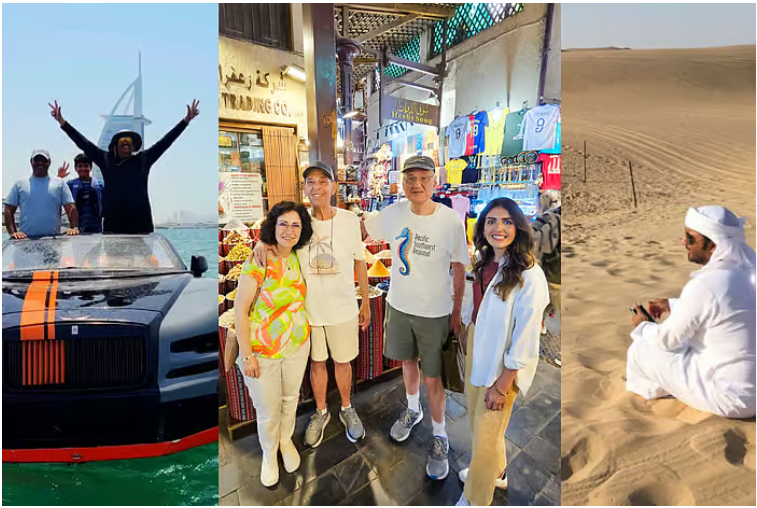
Is everyone in Dubai a millionaire? Do tour guides ever get tired of visiting the same attractions? And can a broken Christmas ornament be replaced and delivered all the way to the United States?
These are just some of the unusual questions and requests three Dubai tour guides have received from visitors.
Their experiences reveal something about the expectations tourists bring with them. Many arrive with images of towering skyscrapers, luxury hotels and enormous shopping malls in mind. The guides, however, often find themselves introducing visitors to a different side of the city, one filled with history, culture and everyday experiences that rarely make it into travel advertisements.
‘If Everyone Were a Millionaire, I Wouldn’t Be Working’
Faheem Abbas, who has worked as a Dubai tour guide since 2018, said one question from visitors always makes him smile: Is everyone in Dubai wealthy?
Some tourists arrive expecting the entire city to live the kind of luxury lifestyle they see on social media. Abbas enjoys correcting that impression.
He sometimes jokes that if everyone in Dubai were a millionaire, he probably wouldn’t have a job as a tour guide.
“You meet people from all over the world, and sometimes their curiosity leads to the most entertaining conversations,” he said.
To help visitors understand that Dubai has a history beyond its modern buildings, Abbas takes them to places such as Al Shindagha and Al Fahidi. He also introduces them to Alserkal Avenue, where art and culture offer another look at the city.
He particularly enjoys seeing tourists discover that Dubai has plenty of stories that existed long before its famous skyline took shape.
The Same Attractions Never Mean the Same Tour
Majed Aljunaibi, a licensed Dubai tour guide who specialises in private and customised tours, once received a question about whether he ever gets bored of visiting the same places every day.
It was a fair question. After all, showing tourists around the same attractions could easily become repetitive.
But Aljunaibi sees things differently.
He explained that although the locations might remain the same, the people he meets and their interests change from one tour to another. Sometimes, visitors even point out details he has overlooked despite visiting a particular place hundreds of times.
“I don’t just introduce people to Dubai; sometimes, through their eyes, I get to rediscover the city myself,” he said.
He also encounters tourists who assume Dubai is little more than skyscrapers, expensive cars, shopping malls and luxury hotels.
His response is simple: “That’s the Dubai you see on Instagram. Let me show you the Dubai that has a story to tell.”
His tours often include Al Fahidi Historical Neighbourhood and the traditional souks in Deira. An abra ride across Dubai Creek gives visitors a chance to learn about the city’s trading and pearling history.
A Christmas Ornament That Flew Like a VIP
Nada Badran, founder of Wander With Nada Badran, received a rather unusual request a few months after taking a family on a Dubai tour.
The family had purchased a Dubai-themed Christmas ornament for their son, but it broke. His mother contacted Badran to ask whether she could help find another one.
Sending a single ornament from Dubai to the United States would have been expensive, with shipping likely costing more than the item itself.
Fortunately, Badran already had plans to travel to the US.
She tracked down the exact same ornament, packed it in her luggage and mailed it to the family after arriving.
“It flew like a VIP: a Very Important Package!” she joked.
For Badran, the request was worth the extra effort because the ornament held sentimental value for the child.
Her connection to Dubai goes back more than 30 years. She has spent the past decade guiding visitors around the UAE, although her interest in showing people the country started much earlier.
Friends visiting Dubai would often call on her for recommendations and a tour. Eventually, she realised that something she had been doing informally could become a business.
She also encourages visitors to look beyond the popular desert safari experience.
“Most visitors think the desert safari is Dubai. It’s a great day out, but it’s only one side of the story,” she said.
Her advice to tourists is to enjoy the safari but make time to explore other parts of the city.
Sometimes, the Smallest Experiences Leave the Biggest Impression
The guides have noticed that visitors don’t always remember the most expensive attractions or the biggest buildings. Some of their favourite memories come from relatively ordinary experiences.
Aljunaibi recalled that tourists who have visited the Burj Khalifa and explored Downtown Dubai sometimes end up talking most enthusiastically about a short abra ride across Dubai Creek.
People travel thousands of kilometres to see famous attractions, yet a five-minute boat journey can become the highlight of their day.
“It reminds me that the best travel experiences aren’t always the most expensive ones,” he said.
Abbas also remembered guiding a group of Girl Scouts from the United States, including participants with disabilities.
During the tour, he explained that the UAE uses the expression “People of Determination” to recognise people’s abilities, strengths and potential rather than defining them by their challenges.
The group was particularly touched by the expression.
“They were genuinely touched by the expression,” Abbas said. “You could see how happy and appreciated it made them feel.”
Badran recalled another memorable experience involving an Emirati man whose friends had arranged a tour to help him refresh his cultural knowledge.
Walking through Old Dubai alongside international visitors allowed him to revisit familiar stories and see parts of his own heritage from a different perspective.
He had grown up hearing some of those stories, but experiencing them again during the tour brought back memories and gave them new meaning.
Learning a Few Arabic Words Makes a Difference
The three guides agree that visitors don’t need to speak fluent Arabic to connect with people in Dubai. Even learning a few everyday expressions can make conversations more enjoyable.
Badran teaches her guests what she calls “The Dubai Five”, a collection of five Arabic phrases they can use during their stay.
She finds that locals appreciate the effort, even when visitors don’t really need the words to communicate.
By lunchtime, many of her guests are already trying out their new vocabulary with people they meet.
Aljunaibi encourages tourists to greet shopkeepers before asking about prices. He also explains the etiquette surrounding Arabic coffee. For example, gently shaking the cup signals that a guest doesn’t want another serving.
Abbas believes visitors should also understand what common expressions mean rather than simply memorising how to pronounce them.
Words such as “Shukran”, “Inshallah” and “Mashallah” carry cultural meaning, and knowing when to use them can help visitors interact more naturally with locals.
“You don’t have to be fluent or know everything about the culture; making that little effort is enough to make someone feel appreciated,” he said.
For the three guides, these everyday interactions are a big part of what makes their work interesting. A tour might begin with a question about Dubai’s millionaires, a request to replace a broken souvenir or an attempt to pronounce a new Arabic word.
And sometimes, the story a visitor takes home has very little to do with the attraction they originally came to see.
As Abbas puts it, the best souvenir isn’t necessarily something bought in a shop. It’s the experience, and the story that stays with you long after the holiday is over.


