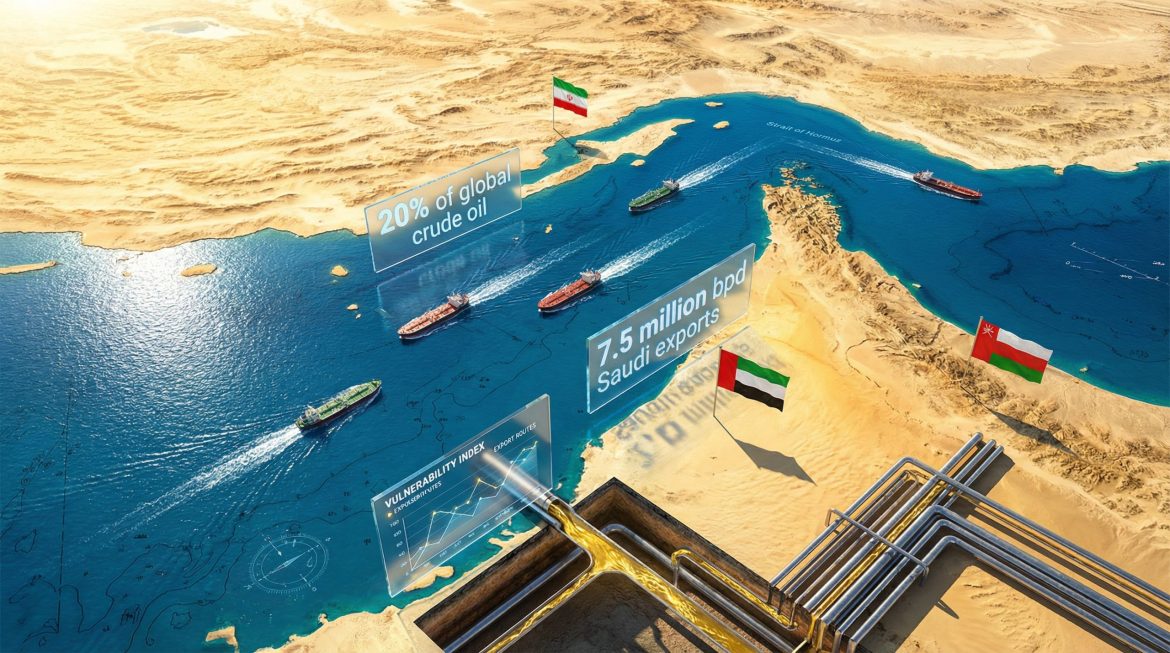
The United Arab Emirates is stepping up efforts to safeguard its energy exports and maritime trade as the security crisis in the Strait of Hormuz continues to disrupt one of the world’s busiest shipping corridors.
The latest escalation came on July 14, when two ADNOC-operated oil tankers, Al Bahyah and Mombasa B, were reportedly struck by Iranian cruise missiles while transiting the Strait of Hormuz. The attack killed one seafarer and injured eight others, marking the most serious assault on commercial shipping since the regional ceasefire began to unravel.
The deteriorating security environment has driven shipping costs sharply higher. Insurance premiums for a single tanker voyage through the Strait have reportedly surged from around $250,000 to as much as $10 million, while vessel traffic through the strategic waterway fell by as much as 90 percent during the height of the crisis.
In response, the UAE has accelerated efforts to reduce its dependence on the Strait of Hormuz. State-owned energy company ADNOC already exports a significant portion of its crude oil through the emirate of Fujairah, located outside the Strait, using existing pipeline infrastructure.
The country is also constructing a new West-East pipeline, which is nearly 50 percent complete and expected to be operational by 2027. Once finished, the project is expected to double the UAE’s capacity to transport crude oil directly to the Gulf of Oman without passing through the Strait of Hormuz.
Meanwhile, global ports operator DP World is in discussions to develop a new port on the UAE’s east coast, with Fujairah and Khor Fakkan increasingly handling cargo diverted from the affected shipping lane.
Within Dubai’s territorial waters, authorities have continued to suspend ship-to-ship transfer operations until further notice as a precautionary measure amid ongoing regional security concerns.
Analysts say the UAE’s investment in alternative export routes and logistics infrastructure reflects a broader strategy to strengthen supply chain resilience and protect energy exports against future geopolitical disruptions in the Gulf.