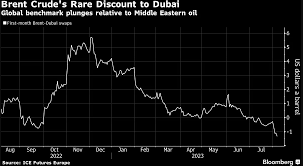
Global oil markets witnessed a rare pricing twist this week as Brent crude, the world’s most widely used benchmark, slipped to a discount against Middle Eastern Dubai crude, underscoring shifting dynamics in global energy demand and supply.
According to traders, Brent futures weakened amid sluggish demand from Europe and West Africa, while Middle Eastern grades found firmer support from steady Asian buying. The unusual inversion saw Brent trading below Dubai on a prompt basis an event that market watchers say highlights the growing influence of Asian refiners in setting price trends.
Asia’s Demand Drives the Shift
The discount reflects Asia’s rising role as the world’s largest crude-importing region, with China, India, and other fast-growing economies increasingly shaping pricing benchmarks. Dubai, which is more representative of medium-sour crude grades preferred by Asian refiners, has maintained resilience as demand from the East stays robust.
By contrast, Brent, a light-sweet crude grade, has faced weaker pull from traditional buyers. Refinery maintenance in Europe and muted buying interest in Africa have further pressured the benchmark.
Market Implications
The rare discount could alter trade flows, with some Asian refiners potentially favoring Brent cargoes if the gap persists. Analysts say the development also signals how traditional benchmarks may face challenges as global demand patterns evolve.
“This is a clear sign of how the center of gravity in oil markets continues to move toward Asia,” one energy strategist noted. “It also shows that Brent, while still dominant, no longer tells the whole story.”
Broader Energy Context
The shift comes against the backdrop of uncertain global demand, fluctuating interest rates, and OPEC+ production policies. While crude prices remain volatile, the inversion of Brent and Dubai underscores how regional supply-demand balances can produce unexpected shifts in global benchmarks.
For now, traders are watching closely to see if the discount is short-lived or the beginning of a longer-term trend that reflects Asia’s rising clout in global energy markets.